“Whatever it Takes – Miss Congeniality Remix“ by Imagine Dragons, Miss Congeniality
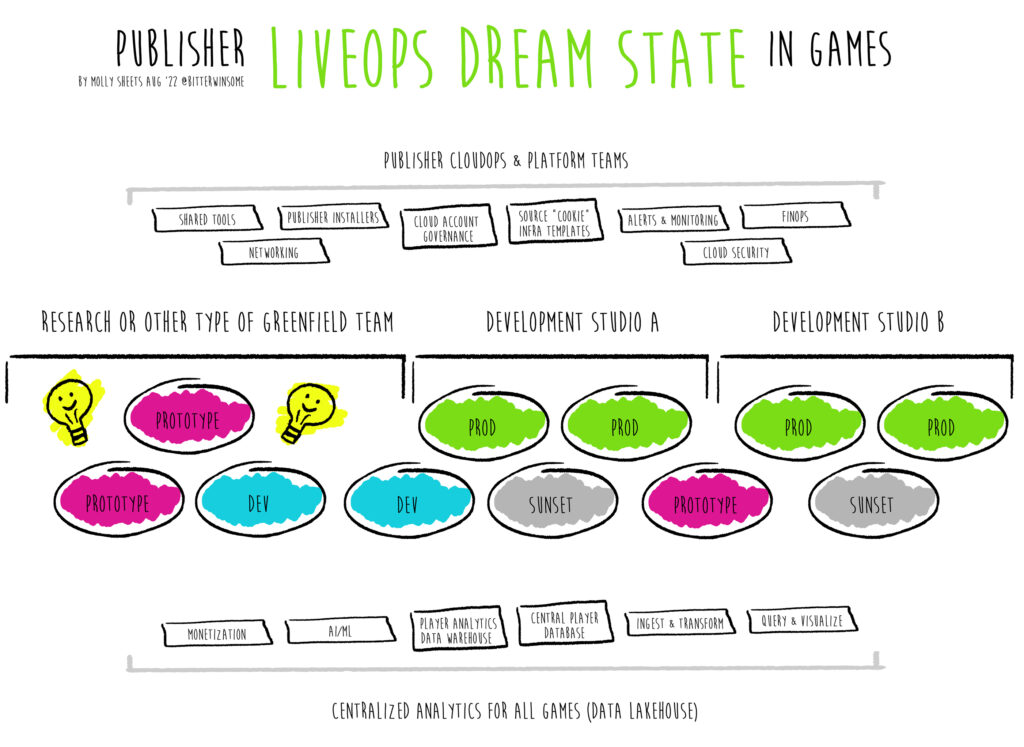
12 years ago while sitting down on PrinceNapped, I thought “Wow. We have to now build analytics” and felt a deep worry about cost and visibility. The weight of limitations was palpable as I searched between cloud-based solutions and whatever anonymous analytics we could get at the lowest cost possible.
This started my journey in moving from a client-side game designer persona into understanding Analytics pipelines – ETL vs ELT, storage (S3), all-things-Amazon Kinesis, and RedShift. I eventually got “Big Data” certified in AWS (a cert that no longer exists), which is a feat I still don’t believe because taking the real 3 hour test after 5 practice 3 hour tests is something I cannot imagine doing today as a parent of a 2 year old.
When I build things, I do it knowing there are different kind of game developers out there, we are all limited by time, and that the future of games is going to be built by a diverse range of people – all of whom need to meet the expectations of their players.
The World has Changed
We now have OpenTelemetry, we have agents and LLMs, the costs of storage has gone down, and we have solutions for the frontend, the client, the backend for analytics.
You can collect data on your hosts, your devices, your players, and there are real reasons to cross-reference between all of that data to understand why a customer or player is experiencing a problem as well as what has potential.
At the same time – in an effort to rightfully protect consumer data and enable agency on behalf of the user, we also have complicated age gate policies that vary by region, legal requirements to document and categorize how data is stored. Knowing and understanding all of this is a challenge in and of itself. It can be overwhelming even with the help of AI and put any creator on edge of – did I do this right enough?
The solution I am presenting is an example – it is not meant to be your solution, but it is here to enable you to think about what you can do early for setup and the costs around it so that later when you actually launch a game you have already gotten part of the way there. I used Wonderlum for this example – the reason I love continuing to build any game is it gives you the immediate foundation to build the eco-systems you need around it.
I’m concerned a lot of people skip to what is easy in the short term without doing what is best – which is to say, they launch their game and maybe they use Steam Analytics or other tools but then no longer have the storage for their own deep analysis on bugs, features, and behavior.
Once you store and own the data you can build your own visibility tools – you do not have to use Grafana or QuickSight or other data visualizers unless you want to be locked into that frontend. While these are great tools, I encourage folks in this world to dream as big as possible. What if you want to build consolidated visuals – ad hoc or repeatedly – that show your data how you want? I’ve learned from using Claude for two years that one thing it is great at is frontend visuals even if we still have some ways to go on models for other use cases.
The Architecture
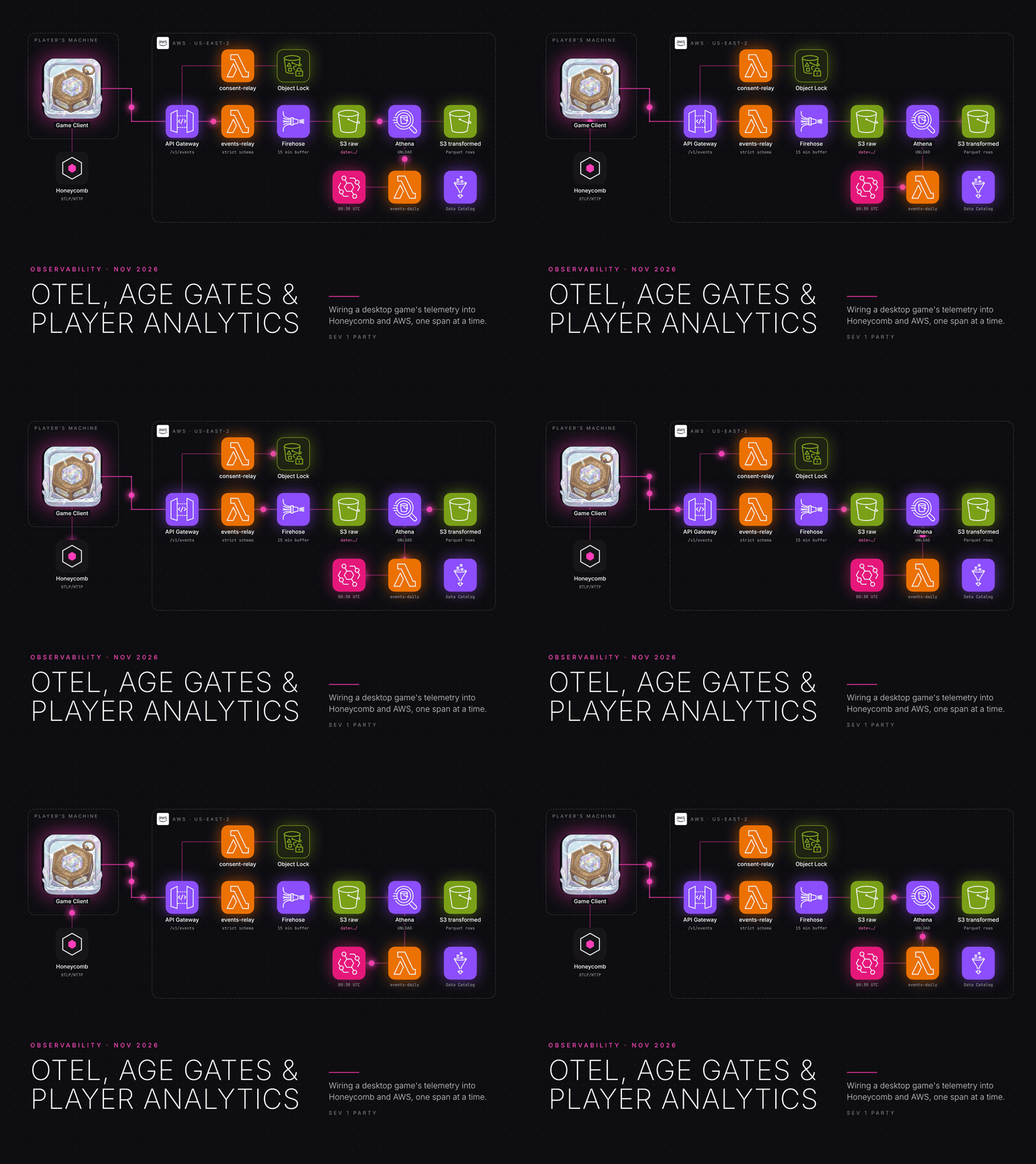
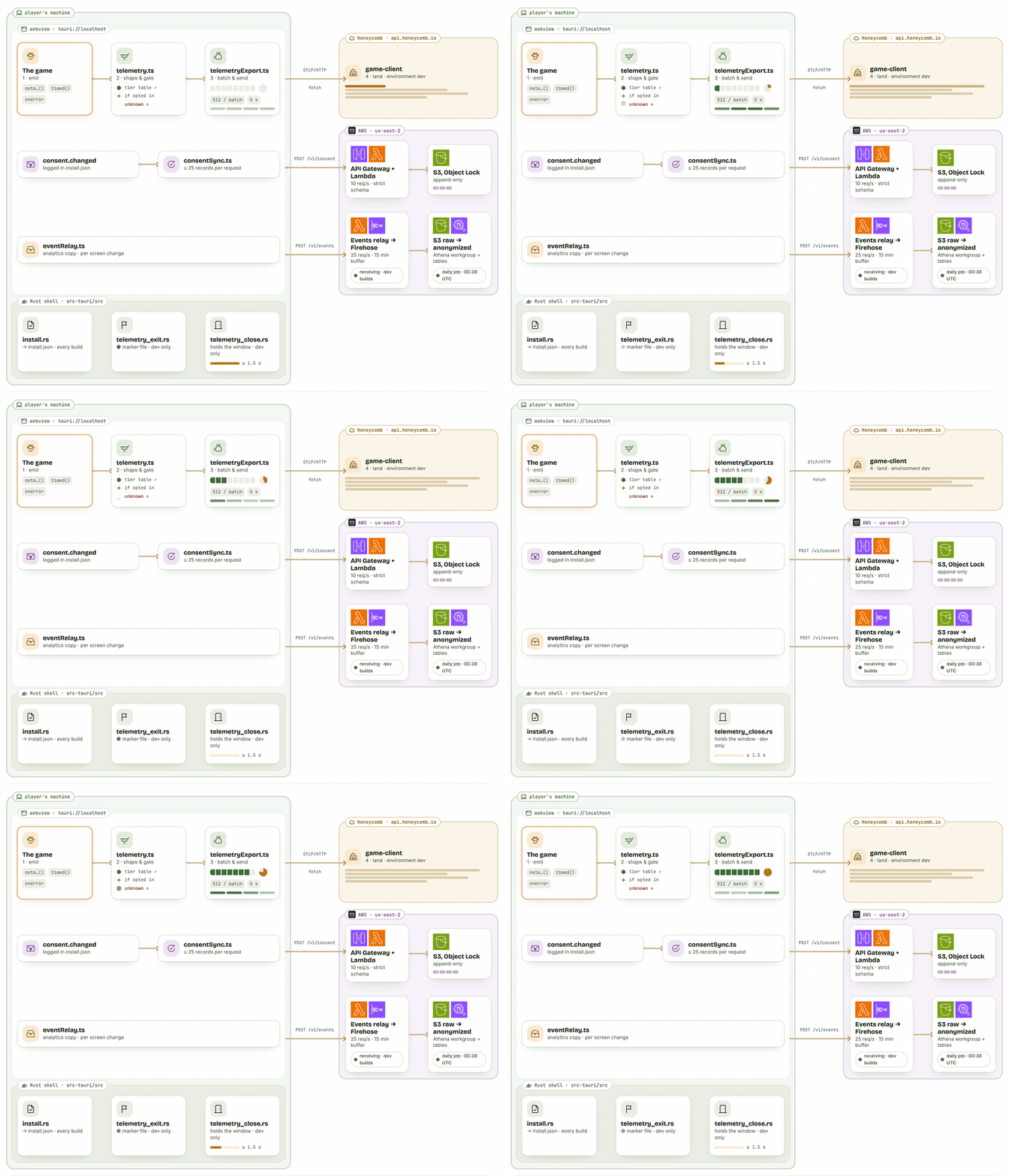
My solution for getting the analytics I wanted is intended to be “simple but expandable.” First, for performance, I used Honeycomb’s amazing MCP to help me setup OTel (OpenTelemetry) for client-side observability into Honeycomb into an environment there I call “game-client.” Yup – I didn’t use it for the backend and I didn’t use RUM! (Gasps).
Advantages of Honeycomb
Hilariously, I thought I wouldn’t use the data for a while, but in setup, and I should have realized this, Claude Opus 5.5 loves to go off on tangents for bugs. It immediately found several while we were testing the pipeline. These were not bugs in the pipeline – these were bugs in the game due to slow screen loads.
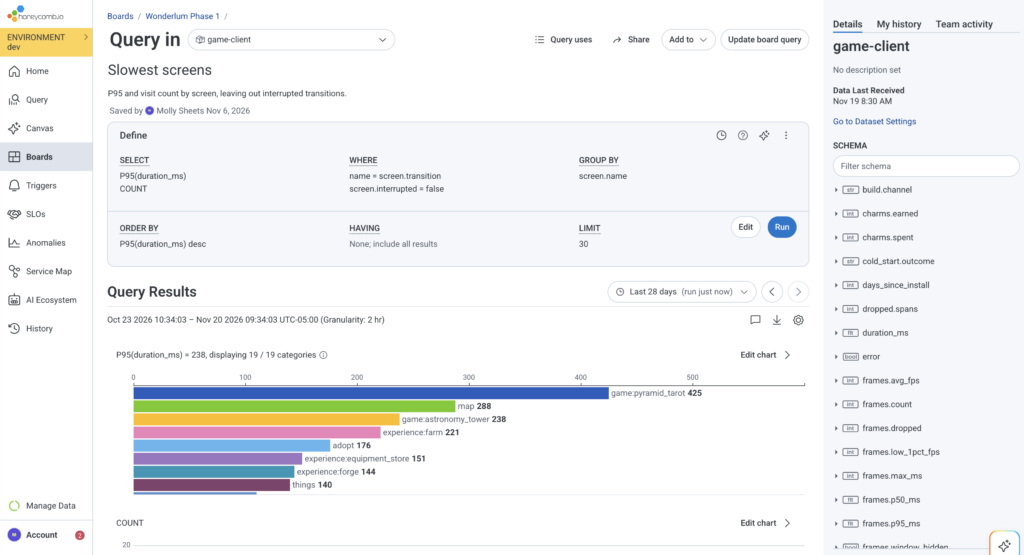
The reason this took several days was not because of the pipeline itself, but rather, we went on a massive bug-finding tangent almost immediately in an effort to make sure the pipeline was working and killed at least 10 birds with one “wanted” style ricochet stone session filled with agents. Did I like it? Not really. My head hurt.
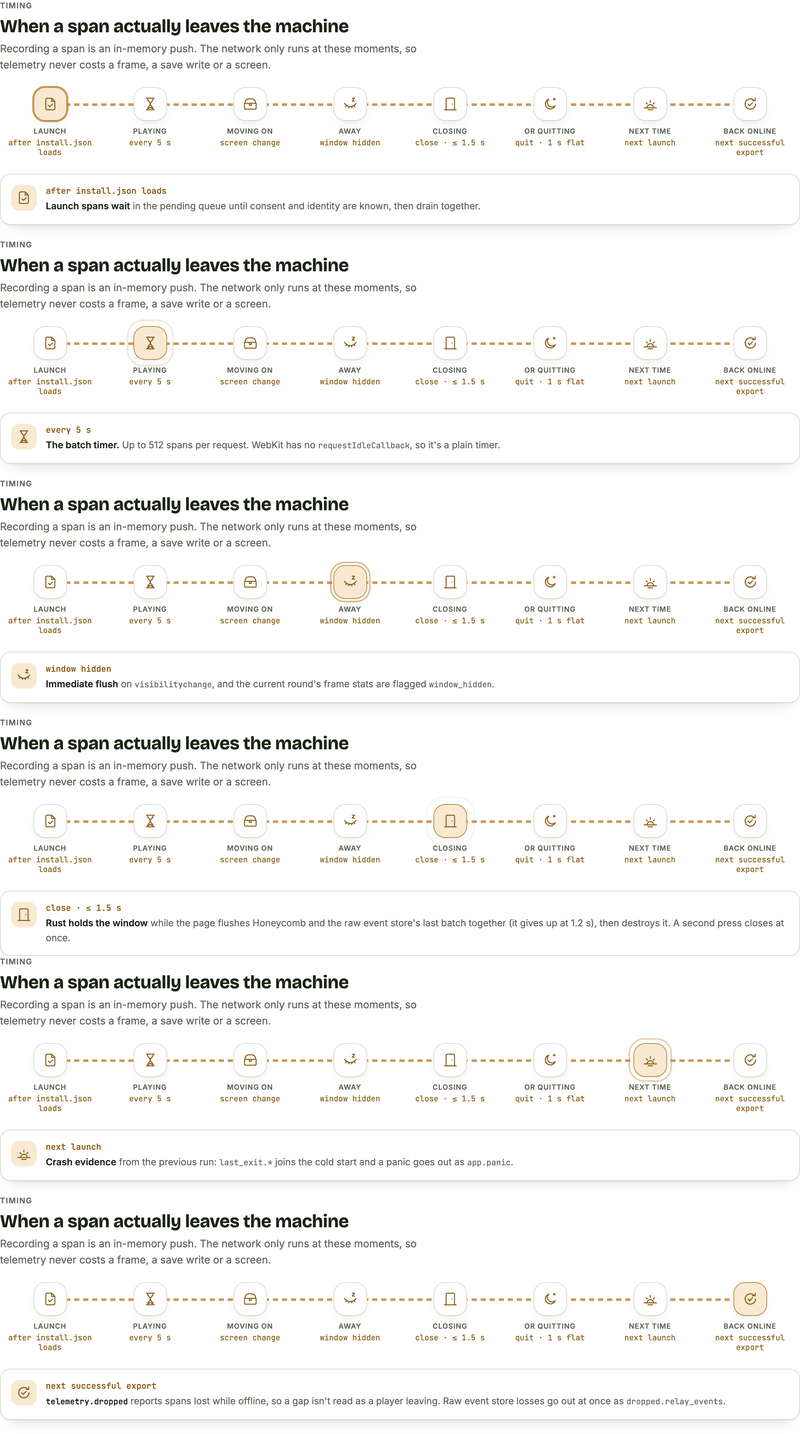
Did it prove it was working? You bet. I’m still learning Honeycomb for my own use case here and that warrants it’s own post, but the main aspect I wanted to highlight is – yes it is possible to use OTel for frontend and even though OTel for the frontend has some ways to go compared to RUM, it helped me immediately.
I think combining these systems with OTel and observability views in the same data lake is increasingly important so I’ve been looking for ways to give me objective while also cross-reference capabilities.
One of the reasons I like this setup is if I ever choose the game in an atypical way, let’s say it was not released to Steam but instead something like Amazon GameLift Streams to avoid people easily cloning the binary using an agentic system, I could also use Honeycomb to monitor my hosting data in the same place.
Age Gates
I want to talk about the challenges around consent. I think it is important before you collect data from anyone outside of your immediate family and close friends that you put in consent. Why? Because this means consent isn’t something the team punts and panics last minute while submitting release builds to app stores. The solution needs to work for multiple countries, multiple places, and your attorney is going to ask how you are doing it.
There is a world where all of us wishes this was less complicated and the solution I have does not (yet) take into consideration the APIs that platforms now have for age gates (for example Apples Declared Age Range API). This solution is something that can be used prior to a specific platform release while you may be still figuring out which store it goes where first and if it will even go on a store (call back to GameLift Streams, friends). I’m also not convinced that the APIs using facial recognition won’t evolve – doesn’t facial recognition to determine age defeat the point of protecting the user’s privacy to begin with? It’s literally scanning kids faces.
I digress – compliance is a journey, not a destination.
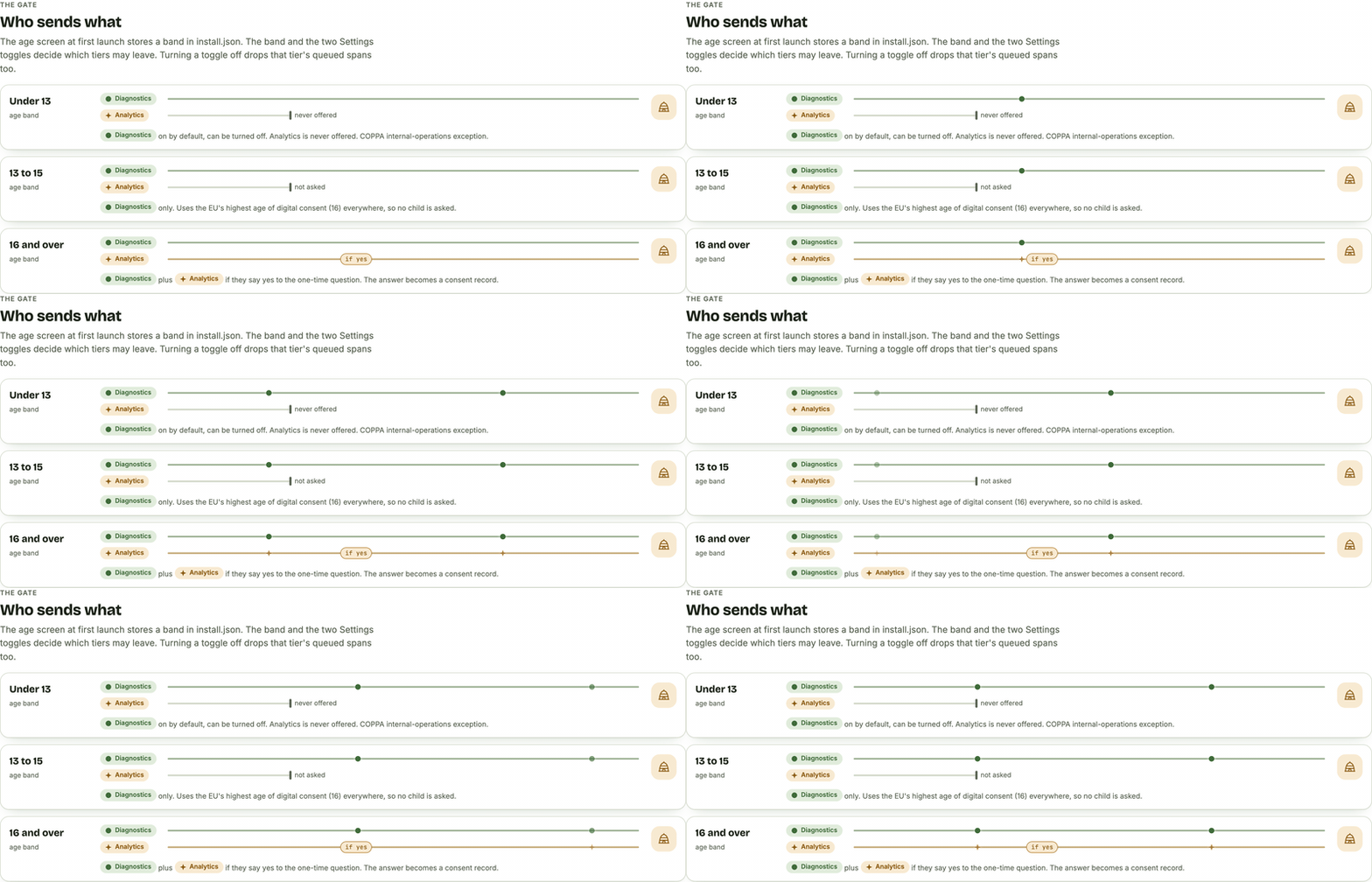
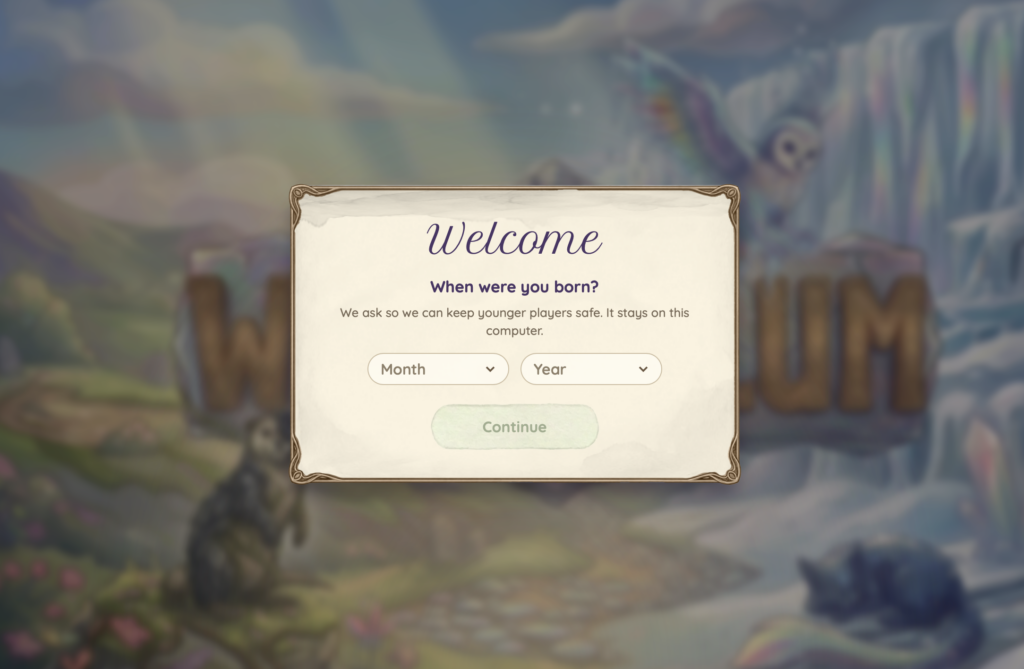
Depending on what age the user is, based on their birthday year and month. changes what gets stored in S3 into different buckets. In the future these screens will be expanded to link to a Privacy Policy & TOS that can be pulled directly from S3 at launch behind Amazon CloudFront (Some of us have learned that storing your Privacy Policy and TOS in Github is a great way to DDoS Github once you throw marketing behind a game launch).
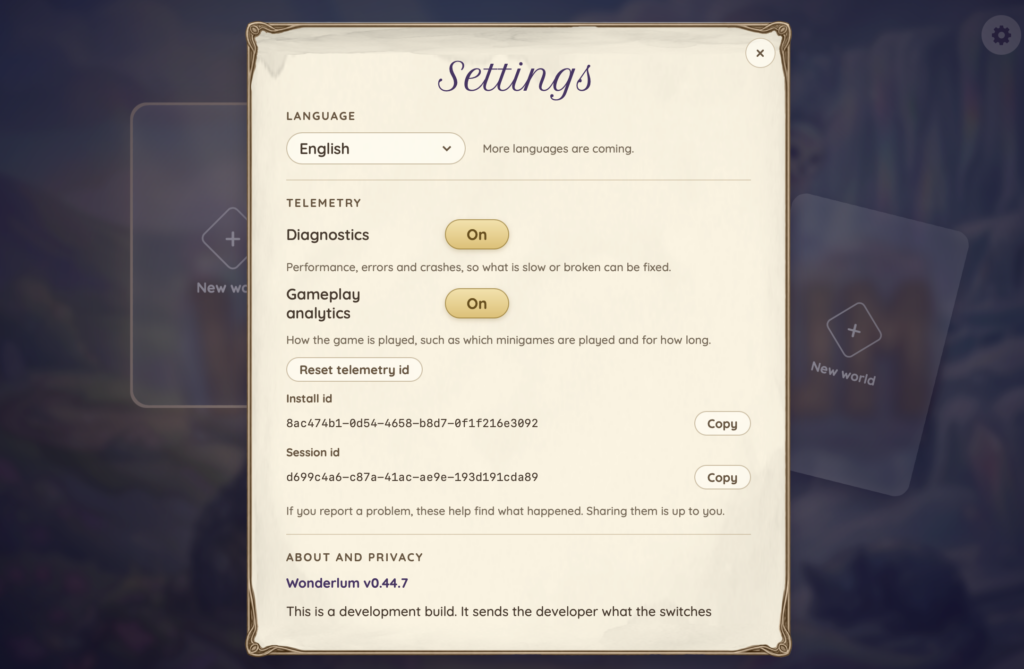
Can we appreciate for a second how good it feels to type something like this in Claude by the way on your local machine on a whim? God.
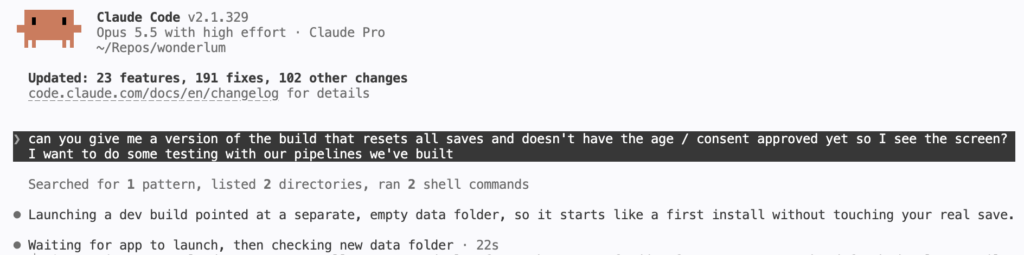
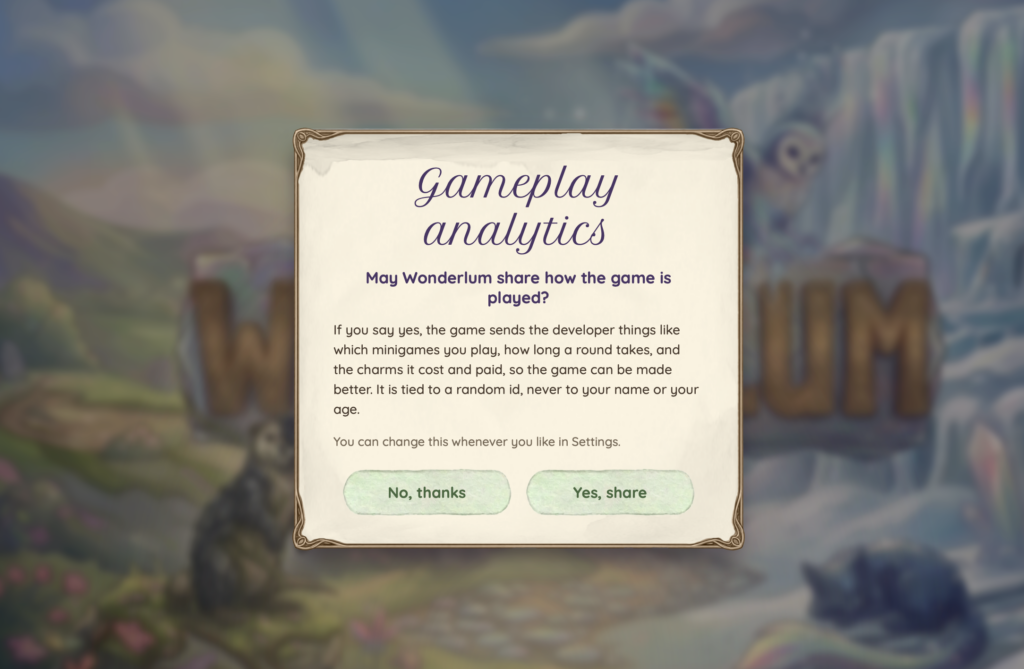
When a user gives consent for Analytics (not only diagnostics) events are routed at 10 requests per second to Amazon API Gateway. Records are batched into Amazon S3 for storage to a consent-specific bucket which is used as compliance collateral to identify if a user consented at all (bucket name id number has been obfuscated for this blog).
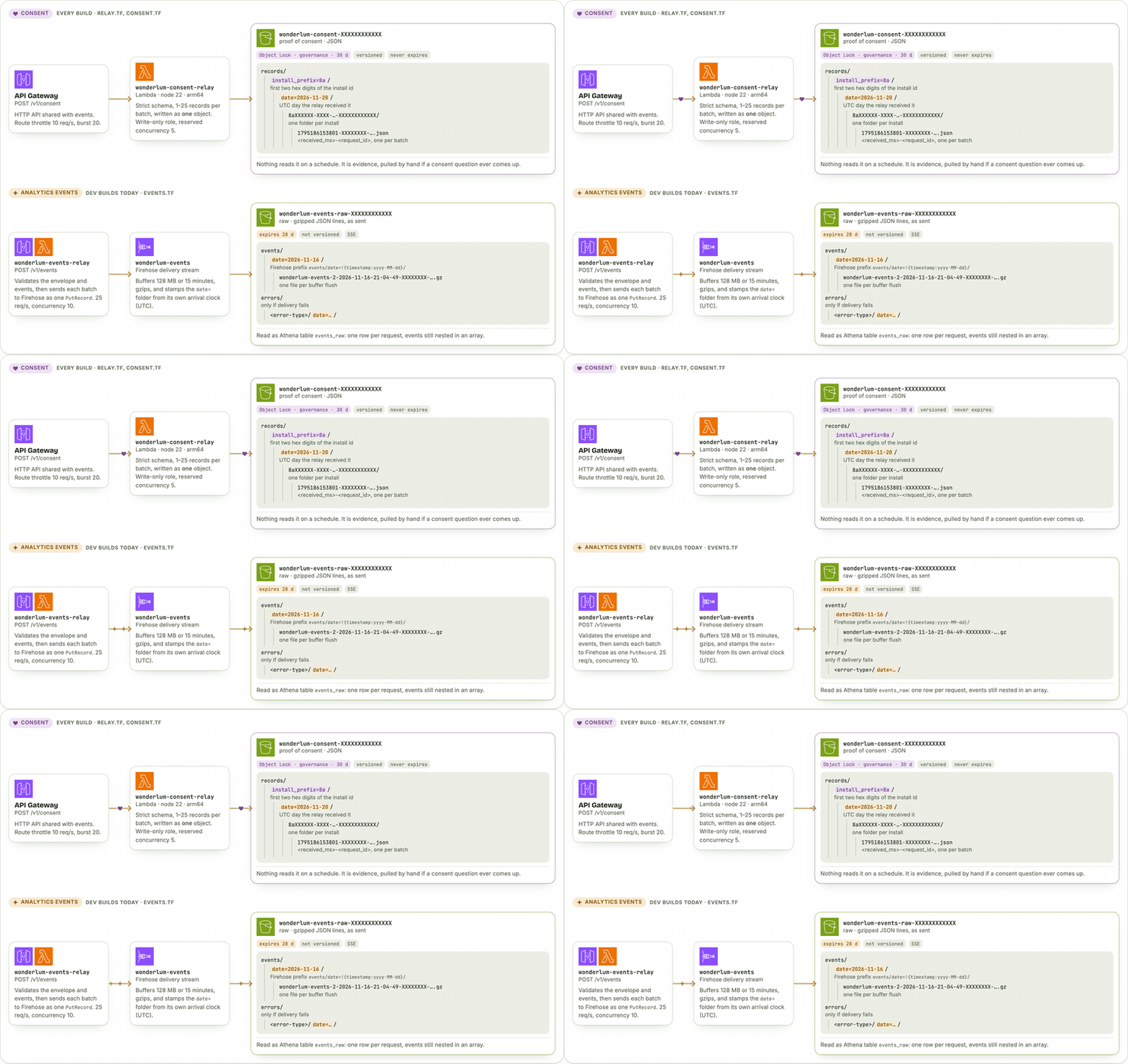
Actual gameplay behavioral events are sent to an events raw bucket using Amazon API Gateway, AWS Lambda, and an Amazon Kinesis Firehose delivery system, prefixed by timestamp as JSON.
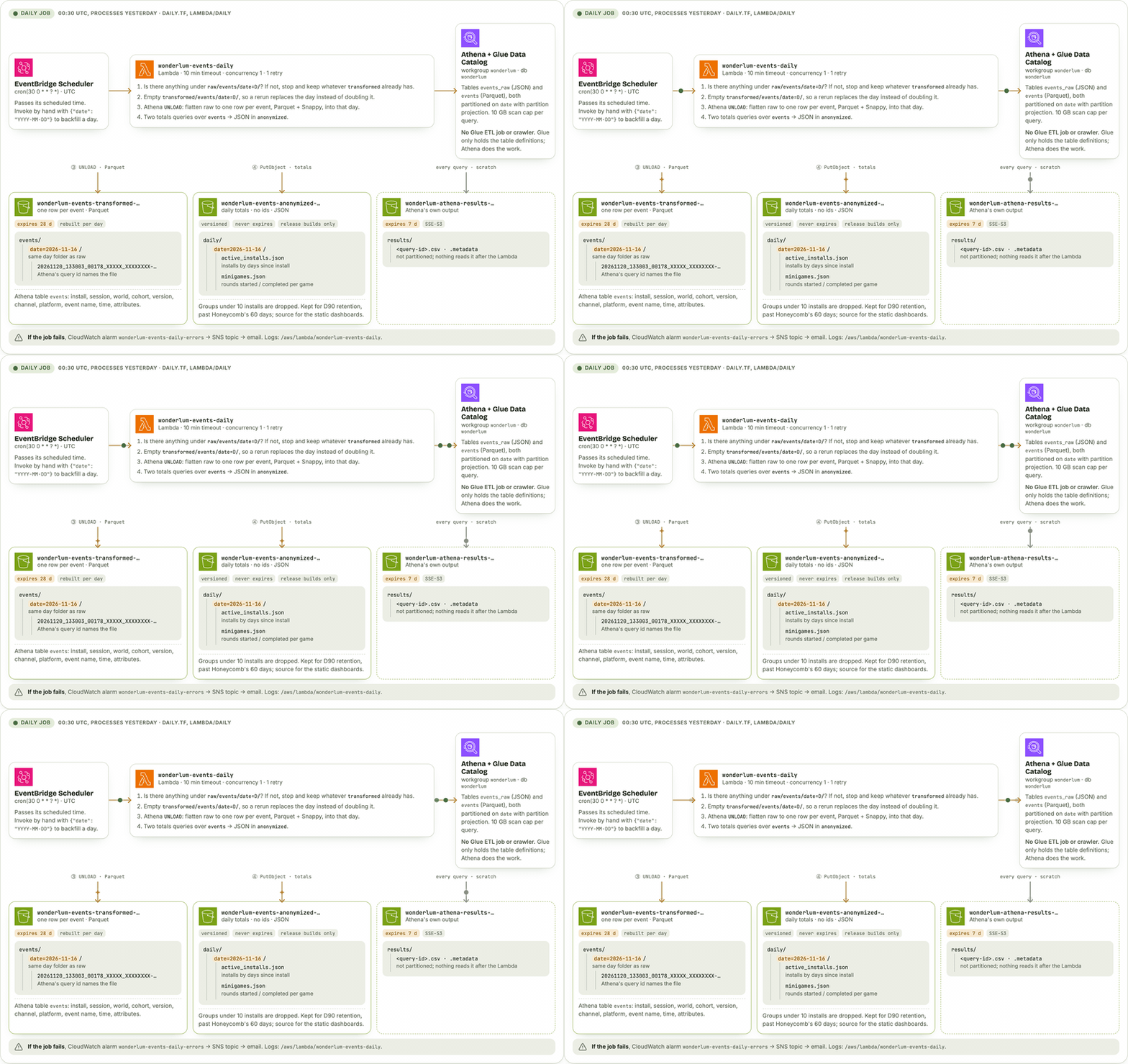
A daily lambda function, triggered by an Amazon EventBridge scheduler, converts raw data into Parquet put into a transformed data bucket which will be used to build my own visuals in the future after I have more data ingested. The system also creates anonymized data as json for daily totals with no ids.
Analytics is an Investment on a Spectrum That Should Change As you Grow
This isn’t where this ends, but I’m pretty happy with the setup so far for the next stage, and I could easily use this for D1 testing and continue to build off of it. During the setup Claude kept trying to point me in another direction – one where other users would have the player’s data in systems that I couldn’t control, secure, or easily design forget me flows for as compliance standards evolved.
Notably, I do have concerns for SPOFs (single points of failure) around endpoints that may need rate-limiting to some of these different systems which I can expand on later. The challenge with Wonderlum in particular is it does not have user accounts intentionally nor does it force users to login. Many games also are setup this way, but it presents challenges for analytics endpoints when you cannot segment intake by device or user to prevent abuse and harassment of the endpoint. Sometimes in finding balance to make the user have more privacy, you also create SPOFs.
During this entire process I had Claude also work on a cost estimates doc for each piece as it was added. It is important to note that this is without Honeycomb costs (which are extremely generous on the free tier so there is really no excuse not to try OTel with it) and also does not include any kind of data warehouse like Amazon Redshift.
The behavior analytics themselves are not “real time” centric which means you would need to expand this if you wanted to use this to do A/B testing on the fly. It is important to understand your goals – the closer you get to real-time, dynamic analytics use cases where you need more queries, more tables, and more data itself, the cost will go up.
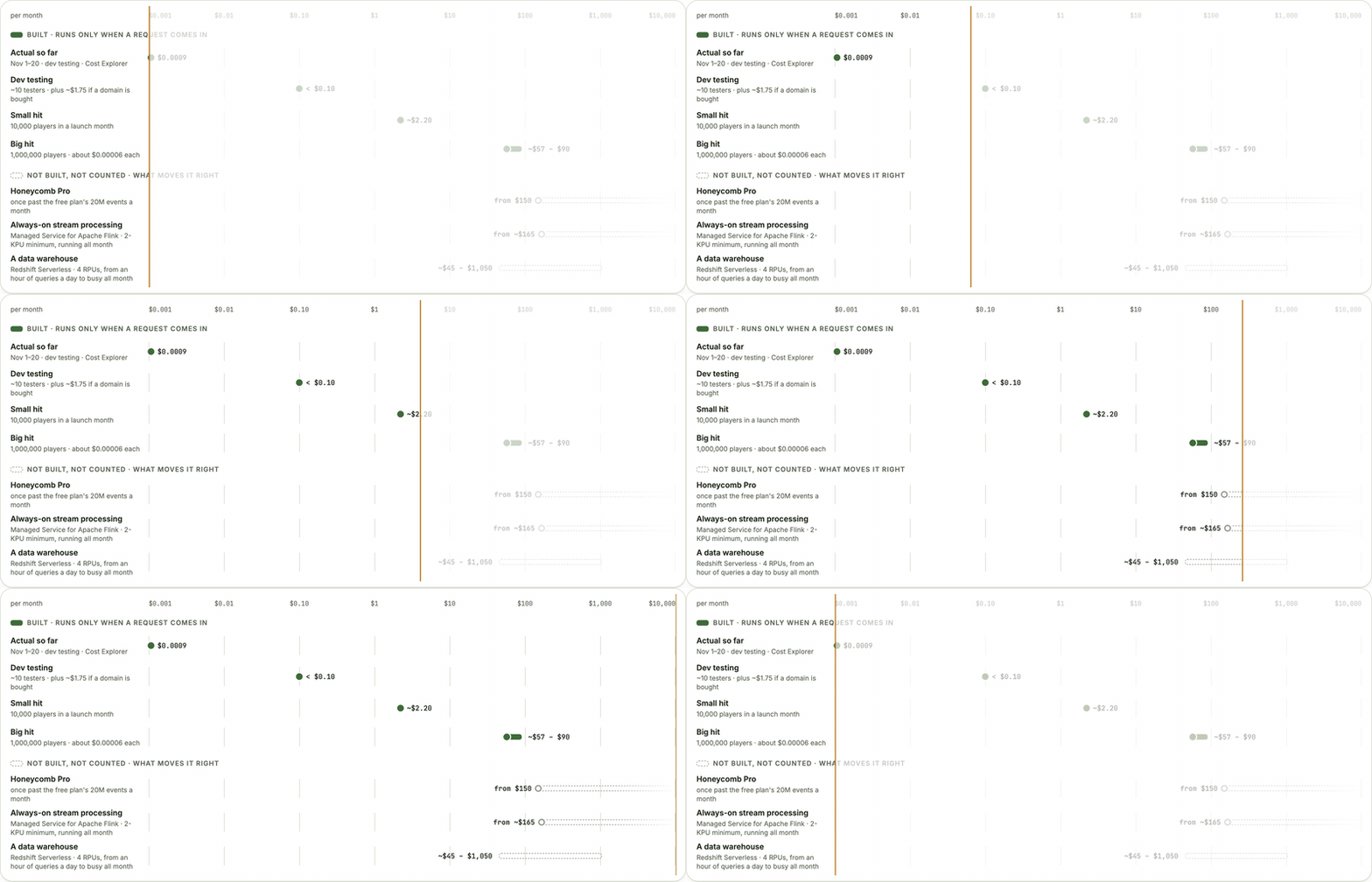
This current setup is going to cost me < $10 a month if I keep the D1 tests less than 10K players based on what I am tracking today. While I am going to add more events and also more gameplay, it still wouldn’t move the needle that much in its current state. Additionally without adding Amazon Redshift or more real-time focused pipeline pieces the max I would likely spend on analytics with even 100K MAU is $100-$300 per month (including Honeycomb). This is largely because of the game type itself – It’s not a multiplayer game, but a standalone game – and the types of events I care about sending today.
I welcome any feedback to this and if you are doing something similar feel free to feed your AI this blog post. We’re all in this future together – and we should do whatever we can to protect our players and their data.